Sunday, November 3, 2019

L1 and L2 Phonologies

When comparing two languages, it is important to look at the speech sounds in both languages. There are shared sounds between Mandarin and English, but each language also has speech sounds, both consonants and vowels, that are unique to each language. As a result, a Mandarin speaker who is learning English may consistently make "errors" when producing words containing sounds that do not exist in Mandarin. For example, /f/ is a shared sound, but /v/ only exist in English. Mandarin speakers may have devoicing errors (/v/ is produced as /f/), omission errors (/v/ is not produced), among other errors.

Bilinguistics, as the name suggests, contains many great resources regarding bilingual speech-language pathology.

Speech pathologists working with Cantonese and Mandarin bilingual speakers may find the following pictures to be useful, courtesy of Bilinguistics.
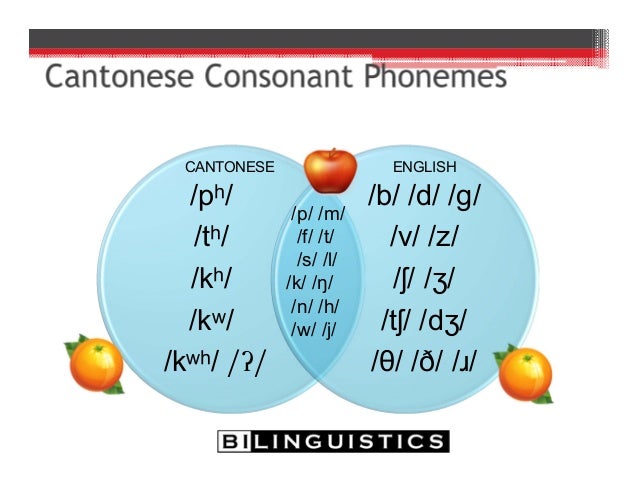
Shared and unshared consonant phonemes in Cantonese and English.
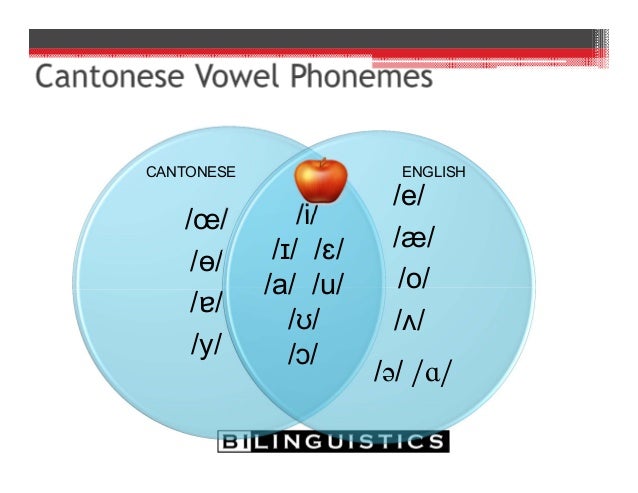
Shared and unshared vowel phonemes in Cantonese and English.
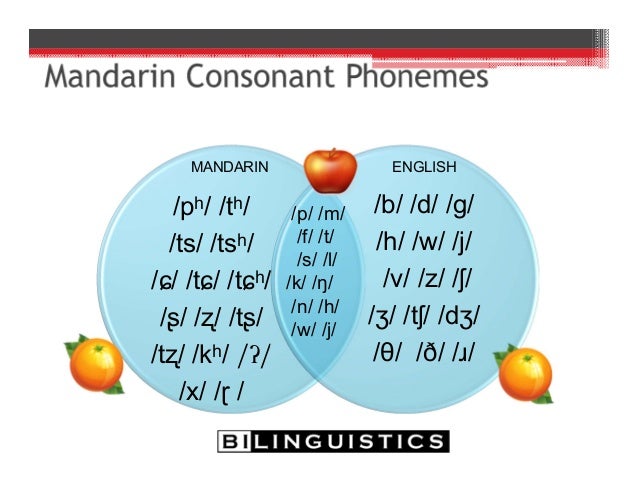
Shared and unshared consonant phonemes in Mandarin and English.
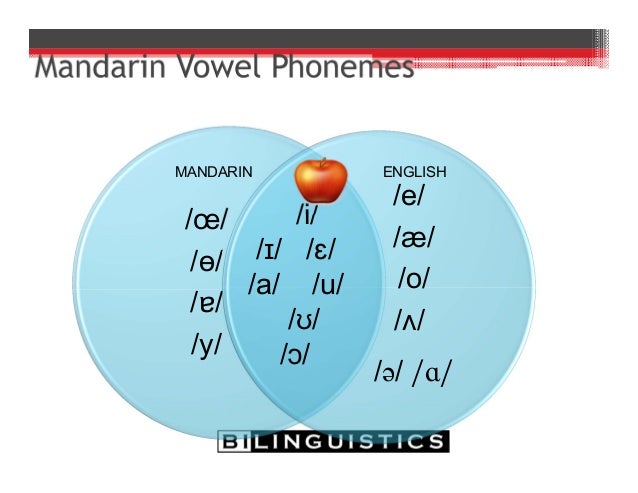
Shared and unshared vowel phonemes in Mandarin and English.

For other languages, Bilinguistics developed a book that speech-language pathologists can refer to when evaluating the speech/language skills of children from different cultural and linguistic backgrounds. 

No comments:

Post a Comment

Bilingual Therapy Ideas

I like using books in my therapy sessions because there are many great stories waiting to be read. Reading is an excellent and fun way to in...